
A complete guide to the Islamic estate distribution system — obligations before distribution, types of heirs, calculation methods, and the role SmartFaraid plays in helping your family. Click any topic below to jump straight to the section you need.
Introduction
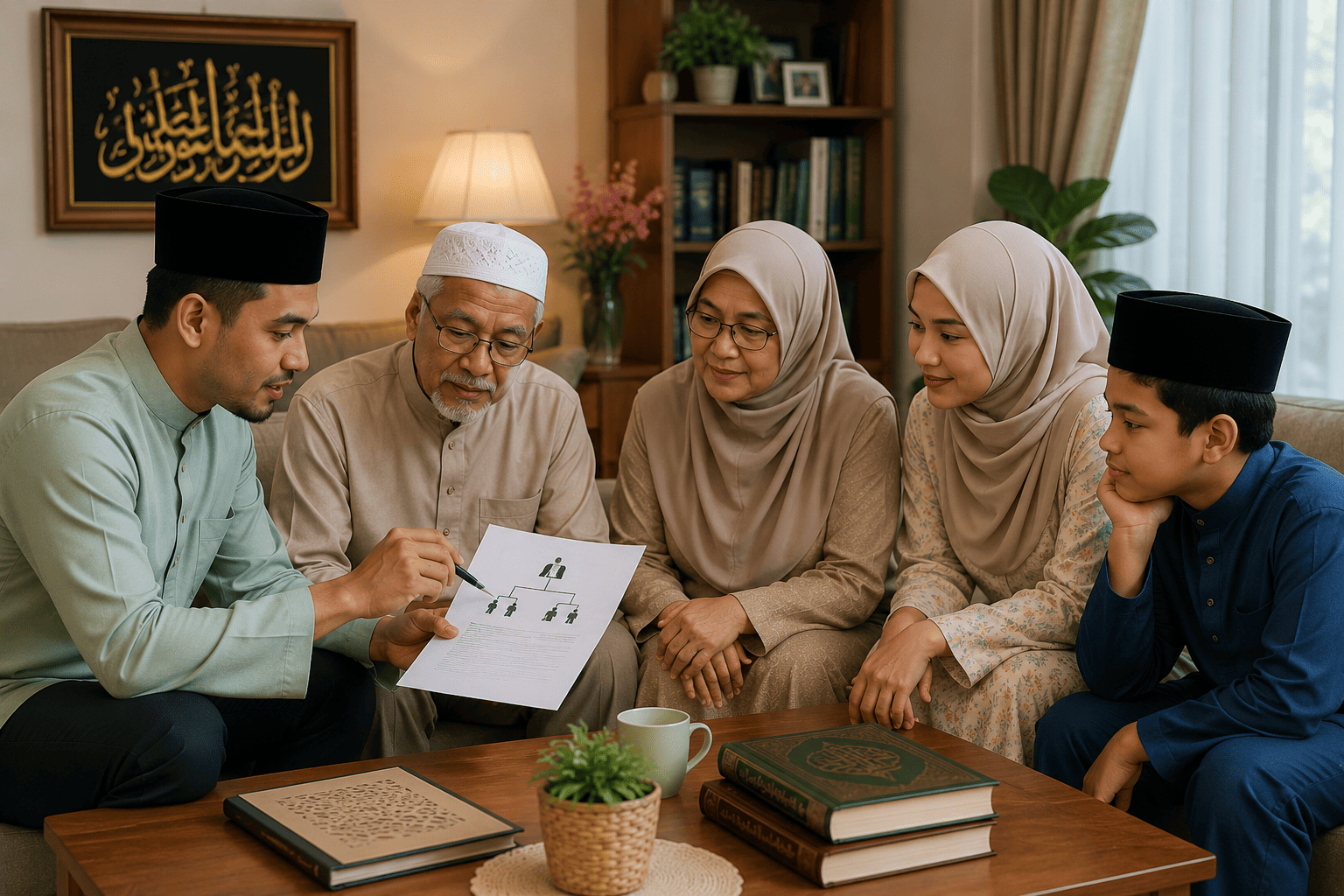
When a Muslim passes away, the estate they leave behind cannot simply be distributed as one pleases. Allah SWT has established a fair distribution system through the law of Faraid — each heir receives the share set out in the Quran.
This system ensures no heir is left disadvantaged, and the estate is distributed fairly based on responsibility and family ties between the deceased and their heirs.
This guide walks you through the entire process — from the mandatory steps before calculation to the method for determining each heir's exact share.
Watch the Video — Why Faraid Matters?
Priority
The net estate eligible for Faraid is only calculated after all of the following obligations are settled, in order of priority. Heirs are only entitled to the balance once all these deductions are complete.
The reasonable cost of washing, shrouding, and burying the deceased is deducted first — neither excessive nor insufficient.
All debts must be settled before distribution:
Property jointly acquired by husband and wife during the marriage. The surviving spouse's share is separated first — this is not part of the estate, but the spouse's own property.
The deceased may bequeath up to 1/3 of the net estate to a chosen party — provided the bequest is not made to a Faraid heir without the consent of all heirs.

Heir Categories
Heirs in Islam fall into two main categories based on the type of entitlement they receive.
Heirs who receive a fixed share as specified in the Quran. Their share does not change except under certain conditions.
| Heir | Condition | Share |
|---|---|---|
| Husband | No children | 1/2 |
| Husband | Has children | 1/4 |
| Wife | No children | 1/4 |
| Wife | Has children | 1/8 |
| Mother | Has children / 2+ siblings | 1/6 |
| Mother | No children, <2 siblings | 1/3 |
| Father | Has a son | 1/6 |
| Daughter | One, no sons | 1/2 |
| Daughters | 2+, no sons | 2/3 |
Asabah heirs receive the remainder of the estate after fixed-share heirs take their portions. If there is no remainder, they receive nothing.
| Heir | Note |
|---|---|
| Son | Asabah bi nafsihi. Together with daughters, ratio 2:1 |
| Father | Becomes Asabah if there is no son |
| Grandfather | If there is no father |
| Full Brother | If there are no children and no father |
| Baitulmal | If there are no direct heirs |
Note: Sons and daughters together are counted as Asabah — a son's share is double a daughter's share (2:1 ratio).
Method
Here is the correct sequence for calculating Faraid — from determining the net estate through to distribution among heirs.
Deduct funeral costs, debts, matrimonial property & bequest from the gross estate.
List all surviving heirs and confirm their relationship to the deceased.
Give Ashab al-Furud heirs their fixed share according to the Faraid table.
If the total exceeds 1, reduce each share proportionally (Aul).
The remainder after fixed shares is distributed to Asabah heirs.
If there are no direct heirs, the estate is handed over to the state Baitulmal.
Aul occurs when the total of all heirs' fixed shares exceeds the value of the available estate. For example, if the shares total 13/12, each heir instead receives their share out of a denominator of 13 rather than 12.
This way, every heir still receives their share — just at a slightly smaller proportional rate. The principle of Aul ensures fairness is preserved even when the estate is limited.
Our Service
SmartFaraid is a Faraid preparation and planning service that helps Muslim families identify eligible heirs and understand the estimated share of each heir based on Faraid principles.
This service covers gathering family information, organising assets and liabilities, identifying heirs, and providing an initial overview of the estate distribution.
SmartFaraid helps you understand:
Watch the Video — What is SmartFaraid?
Benefits
Reduce confusion, simplify preparation, for your family's peace of mind.

Makes it easier for families to know who is entitled to the estate under the true rules of Faraid.

Provides an early picture of each heir's estimated share according to Faraid principles.

Helps gather information on assets, financing, debts and obligations in an organised, comprehensive way.
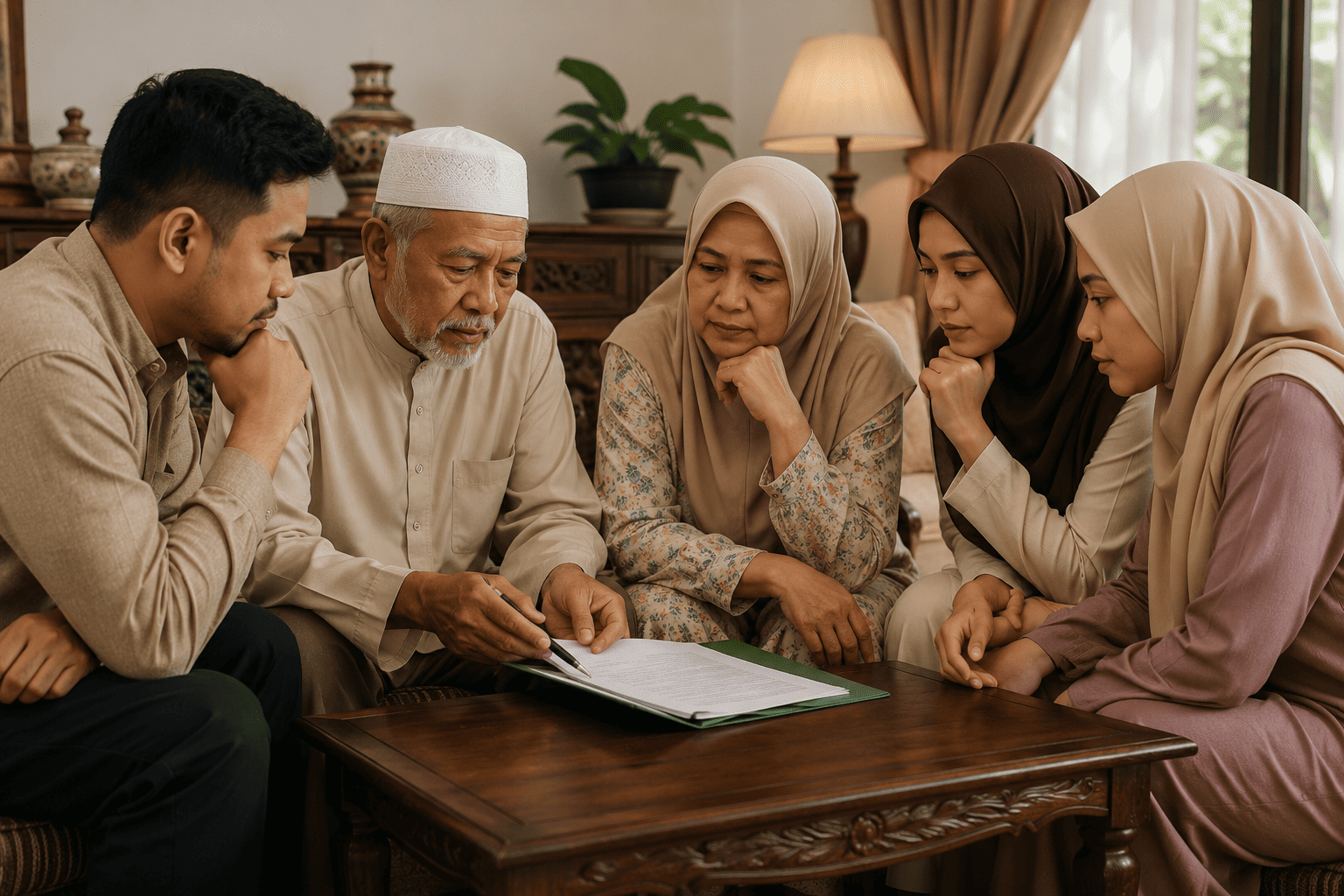
Helps family members understand the estate's position and the next steps to take.
Risks
Families may be exposed to the following problems:
Clearer preparation helps estate matters begin more smoothly and reduces the burden carried by heirs.
How It Works
A simple 4-step process — from submitting information to receiving a complete summary.
Share relevant family information, assets, debts and obligations.
Information is reviewed to identify heirs and the estate's position.
An estimated Faraid distribution is prepared based on the information provided.
Receive a complete, organised summary of heirs, assets, liabilities and estate distribution.
Who It's For
Suitable for Muslim individuals and families who need clarity about their estate. Click each title to learn more.

Preparation
Prepare the following documents before starting your SmartFaraid process.
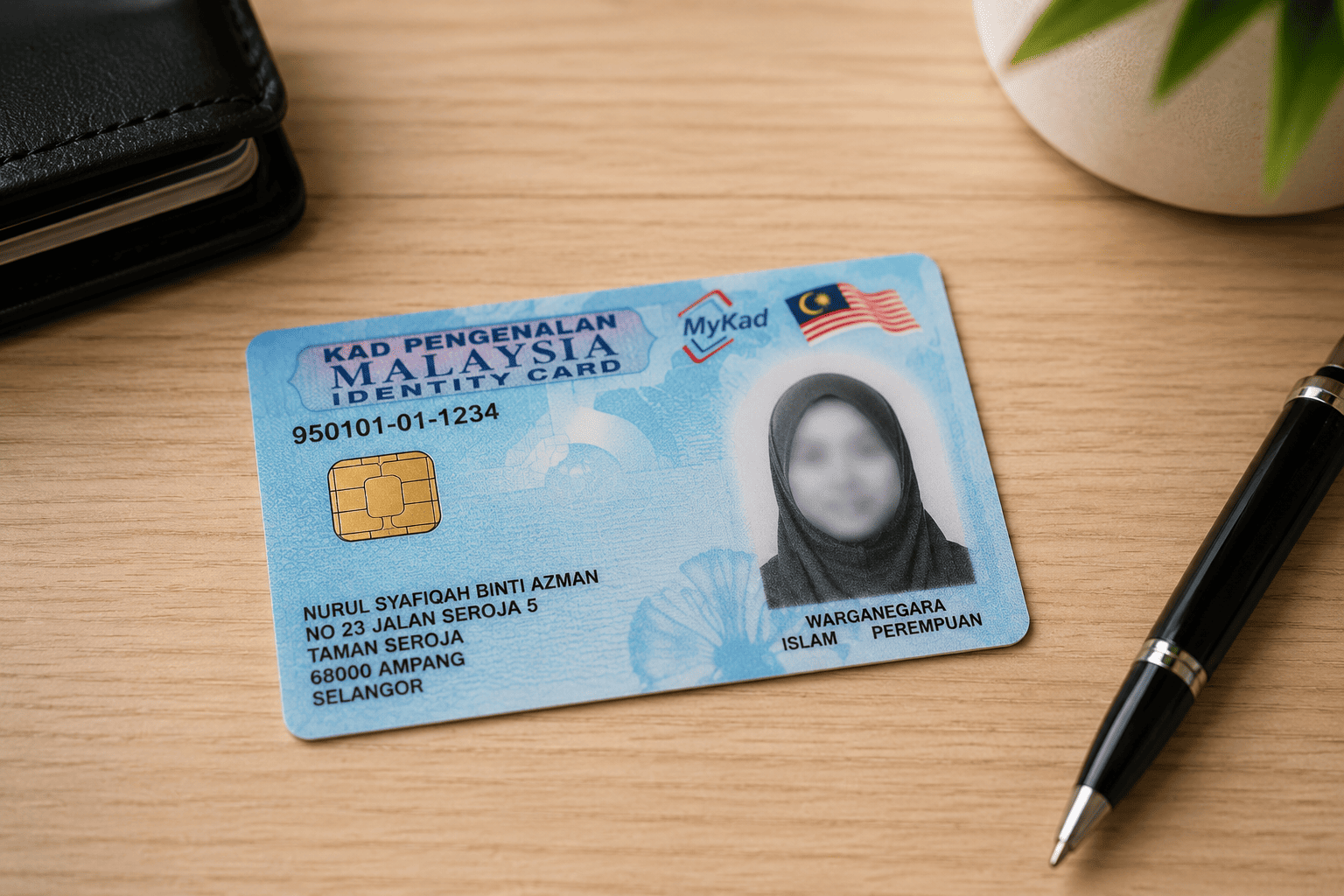
MyKad of the estate owner or the deceased, and the relevant heirs.
Marriage certificate, birth certificates and documents proving family relationships.

Information on property, bank accounts, investments, vehicles or businesses.

Information on financing, loans, debts and related obligations.
A complete document checklist will be provided based on your family situation and asset types.
FAQ
Answers to frequently asked questions.
Enter heir information and estate value — get an instant estimated distribution.